
Introduction
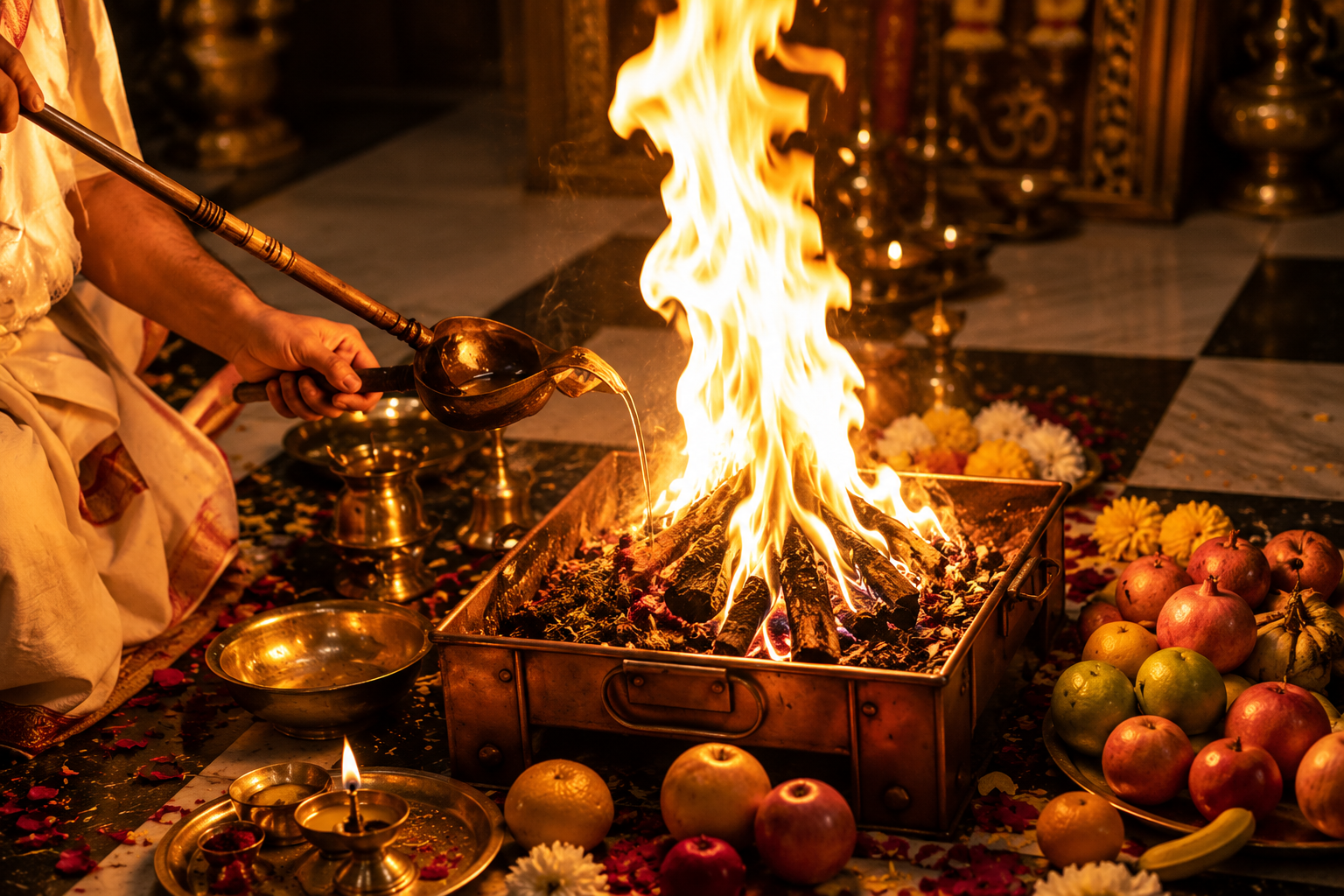
When most people hear the word Yajña, they think of a sacred fire ritual. However, the Vedas present Yajña as much more than a ritual. It is a universal principle that sustains nature, promotes harmony, and guides spiritual growth.
According to the Vedas, Yajña helps maintain balance in the environment, supports human well-being, and connects individuals with the Divine.
The Importance of Yajña
All four Vedas emphasize Yajña because it represents the natural cycle of giving and receiving that sustains the universe.
The Rigveda describes nature itself as a Yajña:
“Spring became the ghee, summer the fuel, and autumn the offering.”
This teaches that the entire cosmos functions through continuous transformation and cooperation.
The Yajurveda declares:
“Ayaṁ yajño bhuvanasya nābhiḥ”
“Yajña is the center of the universe.”
Just as nature operates through balance, Yajña symbolizes harmony between humans, nature, and the Divine.
Spiritual Meaning of Yajña
The deeper purpose of Yajña is inner transformation.
The Brāhmaṇa texts state:
“Yajño Vai Viṣṇuḥ”
“Yajña is Vishnu.”
This means Yajña is a path toward realizing the Divine within.
Two important principles define Yajña:
1. Svāhā – Letting Go of Selfishness
Every offering is made with the word Svāhā, symbolizing the surrender of ego, greed, and selfish desires.
2. Idam Na Mama – This Is Not Mine
This phrase teaches selfless action and freedom from attachment to the results of our actions.
Together, these principles encourage a life of service, humility, and spiritual growth.
Awakening the Inner Light
The sacred fire of Yajña symbolizes the awakening of inner consciousness.
According to the Upanishadic tradition, spiritual growth unfolds through five sheaths:
- Annamaya Kośa – Physical body
- Prāṇamaya Kośa – Vital energy
- Manomaya Kośa – Mind
- Vijñānamaya Kośa – Intellect
- Ānandamaya Kośa – Bliss
As consciousness evolves through these stages, a person experiences greater purity, wisdom, and inner peace.
Benefits of Yajña
The Vedic tradition attributes several benefits to Yajña:
- Environmental harmony
- Mental peace and positive thinking
- Purification of the atmosphere
- Promotion of health and well-being
- Strengthening of spiritual awareness
Special medicinal Yajñas were traditionally performed using herbs such as Giloy, Guggulu, and Apāmārga to support health and immunity.
Yajña and Nature
The Bhagavad Gītā states:
“Yajñād bhavati parjanyaḥ”
“From Yajña comes rainfall.”
This verse highlights the connection between human actions and natural processes. The Vedic view teaches that when humans live in harmony with nature, prosperity and ecological balance follow.
Non-Violence in Yajña
Contrary to popular misconceptions, several Vedic passages discourage animal sacrifice and emphasize respect for all living beings.
The true spirit of Yajña is self-sacrifice of negative qualities, not harm to animals.
Conclusion
Yajña is not merely a ritual performed around a sacred fire. It is a way of life based on selflessness, harmony, and spiritual awakening.
The essence of Yajña lies in the spirit of Svāhā and Idam Na Mama—offering our ego, attachments, and selfishness into the fire of wisdom.
When we live with this attitude, every action becomes a Yajña, leading to personal growth, social harmony, and a deeper connection with the Divine.